Business Fundamentals
- Get link
- X
- Other Apps
Business Fundamentals are the basic skills required to address the different aspects of running an organization. This includes understanding of broad and generic business structures and functions that apply to any organization. Prerequisites to this are People Management, Organizational Design, Human Resources, Financial Management, Micro and Macro-Economics, Global Trends, Marketing and Sales Strategy, R & D, Production, Quality Control and Fulfilment.
Fundamental comprehension of the business is key to effective architecture. Architects that understand the business will be more informed to shape solutions and position IT to deliver better value to the business.
Imagine visting a doctor for a medical check-up. What are the signs of health and wellbeing he/she would look for? Would he/she rely on only one or a few? Similarly, Business Fundamentals provides insight to the health of organisations and where vulnerabilities lie. They are early indicators of future problems and/or opportunities. By training architects to comprehend these, they will be in a better position to guide the transformation of the business to the desired future state. This will direct the selection and prioritization of projects required. Without a grasp of Business Fundamentals, it is possible the organization could be pursuing initiatives that are “barking up the wrong tree” or irrelevant. With it, projects can be better tailored to address business problems or seize opportunities because true measures of success have been identified.
Existing DefinitionsFulfilment also known as Order Fulfilment is the end-to-end process from entertaining a customer enquiry to delivering a product and/or service to the said customer.
Human Resources can be defined in two ways. Firstly, as the workforce or human capital or an organization. Secondly, as the business function within the organization that is tasked with managing the workforce e.g. HR Department.
Micro & Macroeconomics: Microeconomics studies the behaviour of individuals and small impacting organizations in making decisions on the allocation of limited resources. It applies to markets where good or services are bought and sold. Macroeconomics, on the other hand, involves the sum total of economic activity and deals with issues such as growth, inflation and unemployment.
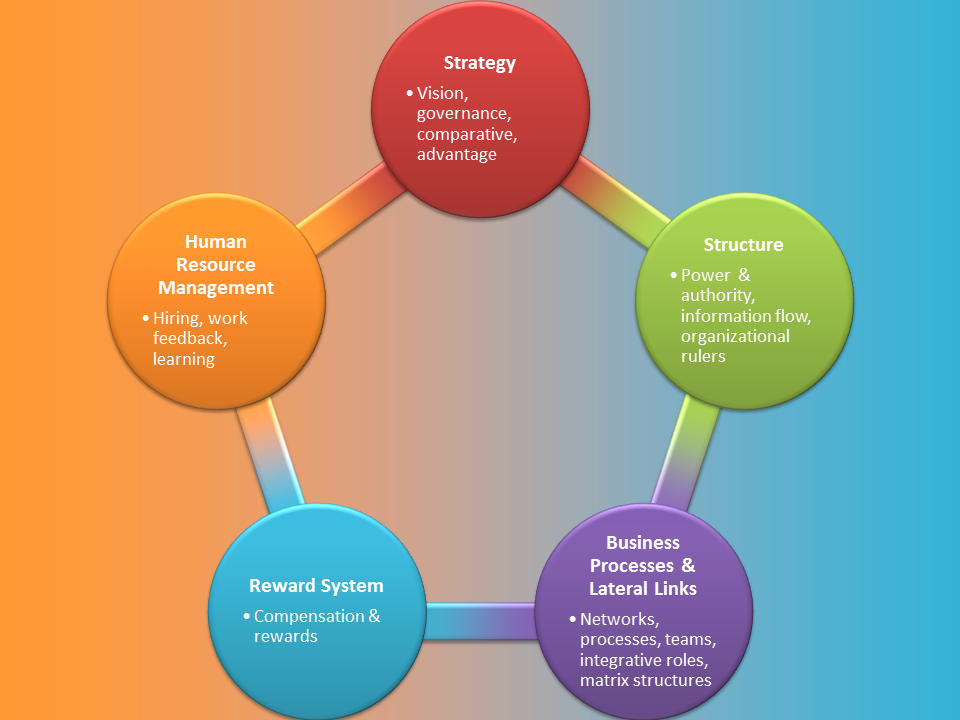
Organizational Design has been defined in Wikipedia, as the process of reshaping organization structure and roles, or it can more effectively be defined as the alignment of structure, process, rewards, metrics and talent with the strategy of the business.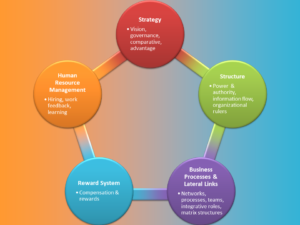 Figure: The Galbraith Star Model of Organizational Design
People Management is about making the most of human capital in an organization. This includes inspiring, motivating, guiding and disciplining members of the team individually and collectively. Dealing with different personalities can be a complex process which is why the skills from the human dynamics pillar are crucial for success in this area.
STEEPLE Factors are the environmental factors bearing on the organization namely Social, Technological, Economic, Environmental, Political, Legal and Ethical.
OverviewBecause architecture is about delivering value to the business. Valuable solutions enhance the business either by solving problems or positioning the business to capture opportunities. Architects who possess these skills are better able to recognize opportunities, engage meaningfully with business stakeholders and guide transformations to successful outcomes.
Business Fundamentals is a substantial topic encompassing several areas. Grasping the fundamentals of “the business” requires:- understanding the internal environment of how the entity is organized – the hierarchy of stakeholders, who the decision makers are and what decisions they make, their goals and motivations and the interdependencies between them
- modelling the internal processes within the organization at an appropriate level of detail
- conducting research on the external environment influencing the entity such as STEEPLE factors, and the industry it operates in
- identifying primary drivers that shape the organization – the success factors of a government department (citizen satisfaction), are different from a bank (reduced risk per customer), a supermarket (profit per customer) or a charity (number of families helped out of poverty). What adds to or diminishes the value of the organization?
- use of accounting building blocks to establish a picture of the financial landscape
Architects are typically consumers of Business Fundamentals developed by business functions such as Finance, Strategic Planning, Marketing, Sales, Business Owners, Process Owners and external business research organizations.- Identify primary drivers that shape the organization
- Create an organizational chart of the entity beginning with key stakeholders
- Identify goals and KPIs of stakeholders that closely address the primary drivers of the organization
- Focus on those goals and KPIs that technology is able to impact the greatest
- Engage stakeholders of those goals and KPIs to define a desired target state
- Employ a capability based planning methodology to translate business aspirations to a program/portfolio that will realize the transformation
Organizational priorities are seasonal. At times it is cost-saving and at other times needing to invest to gain a competitive edge. Together with the perennial need to reduce cost, other drivers are to improve service, efficiency, availability, innovation, quality etc. An architect cannot work on the assumption that all these priorities should be treated equally as the organization exists in a dynamic playing field constantly in flux. He/she has to get a pulse on the organization and its environment.
In an ideal world, the business functions would feed this information to the architect team in well-written and clear documentation. In reality, the architects have to document much of this themselves, relying on the close rapport they have developed with key stakeholders and their ability to ask the right questions in the right way. It would be best for architects to be present during corporate brainstorming sessions and have access to corporate information so they can form a firsthand picture of the business direction as a lot of key information can be lost from secondary sources.
Challenges to achieving this come from within and outside the architect team. Business Fundamentals was not part of their formal training so there will be a learning curve involved. Business stakeholders are not used to architects speaking business – architects have traditionally been left out of such discussions. Worse still, some business stakeholders may even resent the intrusion. This may take some time to change but the momentum is building – businesses are beginning to embrace architects who deliver value. Architects need to be ready for this.
Architects should be able to visualize and articulate an organisation using generic business structures and functions. They are familiar with the drivers that shape the business and the indicators of organizational health. This will require a working knowledge of:- Management (general)
- Marketing and Sales
- Financial Management (both strategy and accounting)
- Operations
- Human Resources
- Product Management
All resources of an organization should be focused on improving these fundamental business capabilities. Each Technology Feature should contribute to a Business Value and vice versa. Without adequate knowledge of Business Fundamentals, there is a danger of delivering technology that falls short of business needs and/or unsupported business goals.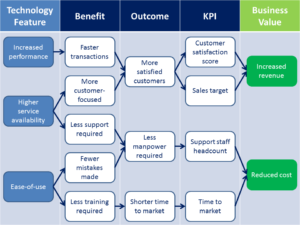 Figure: Bi-directional traeability between Technology and Business Value
Equipped with these insights, the architect is required to engage with the business leadership to identify the Business Fundamentals requiring improvement. A traceability is then established to the deliverables after which the architect works with the technology teams to ensure their appropriateness. An example of this is illustrated in the figure above.
The traditional model of IT delivering systems as per requirements defined by business is increasingly being replaced by pro-active architects who are able to realize valuable technology-driven strategies. Architects need to understand Business Fundamentals so as to engage meaningfully with the business teams and avoid being relegated to the role of mere order taker.
An Architect needs to be familiar with generic organization structures to understand how business entities are organized according to type of business and segment. These structures could be leveraged to accelerate the transformation or guide the design. Identifying the type of business and segment can be used to set realistic expectations for improvement by benchmarking against comparison companies in a similar category. Key drivers for the business, when taken into account early in the architecture lifecycle help ensure the sustainability of organization goals in line with market forces.
Experience has shown billions of dollars have been wasted by the high percentage (more than 50%) of failed IT projects due to business-technology misalignment. Reasons for this include miscommunication and lack of context to technology solutions. By having “business literate” architects, they effectively circumvent these hurdles to engage business in their own language. The more business savvy the architect, the more proactive role they will be able to take on during such engagements rather than depending solely on business to translate business needs to technical features.
Proven Practices- Early engagement with business functions before projects are requested to acquaint oneself with the processes and pains of key business stakeholders
- Able to articulate significant pain points and opportunities on a corporate level and for each business unit
- Apply industry reference models such as value chain analysis, Porter’s Five Forces model or STEEPLE to gain insight to Business Fundamentals
- Undergo a mini-MBA
- Follow information sources on industry beyond technology e.g. trade publications, business journals.
- Develop domain knowledge through knowledge sharing with business or business glossaries
Sub-CapabilitiesManagement (General)
Although there are many definitions of management, the role of management within any organization is basically to:- steer the organization to achieve its vision and mission
- make team members productive and accomplish valuable goals
- handle the impact the organization has on its environment and its responsibilities to society
Architects need a to understand the management role to better work with other managers in the organization. Organizations operate in an environment of constant change. Each industry is unique and needs to be understood in depth. Competitive scenarios, price-demand relationship, product lifecycles etc are characteristics that vary greatly from one industry to another. Managers have to take cognizance of the rapidly evolving role and nature of information, changing demographics, new ways of doing business, fresh paradigms etc.
In addition to these external factors, the internal hierarchy of the organization informs the architect who the influential stakeholders are and what shapes priorities and KPIs.
Aside from understanding how the organization is managed, architects need management skills too. Some of these are:- Decision Making
- Team Building
- Communicating Effectively
- Controlling the Business
- Budgeting
- Utilizing Information
- Fostering Innovation and Entrepreneurship
These place heavy demands on the individual which is why it is crucial that he/she master the arts of managing oneself and his/her boss. Personal Renewal is key to an effective manager as burnout can very subtly degrade performance. The manager has to understand the continuing education required and be disciplined in passionately pursuing this.
| Iasa Certification Level | Learning Objective |
|---|---|
| CITA- Foundation | Learner will be able to
|
| CITA – Associate | Learner will be able to
|
| CITA – Specialist | Learner will be able to
|
| CITA – Professional | Learner will be able to
|
Marketing – It is a fallacy to think the “best” product will sell itself. For one, the definition of “best” or “good” is highly subjective issue in most cases. Secondly, product quality and features are only part of the factors contributing to increased demand.
Experts of marketing have long held that success of a product or service is contingent on an optimal marketing mix.
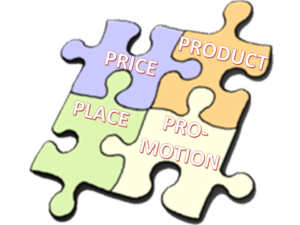 Within this mix are the four interdependent P’s of Price, Product, Place and Promotion. Arriving at this mix is usually after having traversed detailed analysis of the consumer, market, competition, distribution channels and economics.
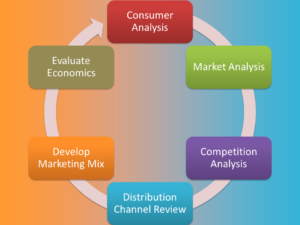 This is an iterative process made more complex by the inter-dependent nature of the 4P’s.
Sales – Although the disciplines of marketing and sales are closely related, they are distinct functions. The Sales Process are those activities from lead generation to receiving the customer order. The dynamics of the process vary greatly from one organization to another and architects need to appreciate and understand the challenges faced by their colleagues in sales.
Lead generation is akin to mining. A sales lead can originate from a variety of sources and the challenge would be to find the few of quality among the many poor prospects. Architects can support by applying technology to enhance this process. Examples of this include mobility, analytics and social media.
Knowledge is crucial to the success of salespeople – knowledge about the economy, industry, organization and product. The same information needs to be presented in different ways at different stages of the sales process. Some of these steps will require access to classified information. How can customers be given access to such information without compromising corporate policies on information security?
Customer Relationship Management is more than just record-keeping – it should inject excitement into the entire salesperson-customer interaction. Someone once said, “Customers don’t buy a product or a service. They buy a good feeling.” Architects need to brainstorm together with salespeople

how to enhance the customer experience before the purchase decision is made.
Monitoring of sales performance is a key activity among salespeople and their superiors. The use of charts, statistics, drilldowns and rollups can greatly enhance this task. Salespeople are often motivated by sales targets such as:
- volume of sales
- profit margins
- number of customers sold to
- percentage of sales derived from new products
- reduction in number of complaints due to overselling
Sales is not confined to direct selling(selling in person). Unattended sales channels such as website, kiosk or vending machine also require architect skills to enhance the user experience, simplify processes, protect privacy and remove wastages.
| Iasa Certification Level | Learning Objective |
|---|---|
| CITA- Foundation | Learner will be able to
|
| CITA – Associate | Learner will be able to
|
| CITA – Specialist | Learner will be able to
|
| CITA – Professional | Learner will be able to
|
Financial Management is concerned with the following areas:
- Business Investment – selecting assets the firm should own or projects the business should invest in
- Financing – sourcing for funds to pay for those investments
- Business Structure – whether proprietorship, partnership or corporation
- Accounting – communicating financial information about a business entity to stakeholders using financial statements
There are always more options than funds allow so a financial manager’s team will evaluate investments, prioritize them and recommend a portfolio of investments. This activity is known as capital budgeting.
Architects sometimes wonder why technology proposals are shot down even though they return a profit. They need to understand some investors are not as passionate about technology as they are and evaluate projects purely on financial merit. Architects should be familiar with valuation techniques such as calculating Nett Present Values and Discounted Cash Flows.
Risk is inherent in every business activity and is the flipside to the expected benefits. Apart from mitigating actions, architects must be aware of the impact risks could have on the business and technology strategies. Risks can originate from systematic, unsystematic/unique and market forces.
Financing
Funding for investments is usually derived from bonds, equity, derivatives and loans from creditors. The mix of such sources of funds is known as the capital structure of the business. Architects would do well to take cognizance of such instruments and of their timings. For example, an upcoming bond maturation could temporarily impact the availability of funds for projects.
Business Structure
Businesses are structured differently and the architect needs to acquaint himself/herself with the differences between proprietorships, partnerships and corporations.
Architects who understand the different reasons behind Mergers and Acquisitions (business diversification, economies of scale, intellectual property, asset base expansion etc) will be in a better position to enhance the outcome of the M&A exercise.
Accounting
Accounting helps us to quantify how much an organization owns, how well it is performing and to analyse sources of income and cost down to very low levels of granularity.
An overview of accounting will take the architect through the following concepts:
- accounting concepts such as the entity, cash and accrual accounting, objectivity, conservatism, going concern, consistency and materiality
- financial statements which are the balance sheet, the profit and loss statement as well as the statement of cashflows
- managerial accounting which is used to diagnose and control performance using variances
- cost accounting which includes activity based costing
| Iasa Certification Level | Learning Objective |
|---|---|
| CITA- Foundation | Learner will be able to
|
| CITA – Associate | Learner will be able to
|
| CITA – Specialist | Learner will be able to
|
| CITA – Professional | Learner will be able to
|
Operations is the raison détre (the reason or justification for existence) of a business. It is concerned with the manufacture of products and the delivery of services to customers. It is a complex combination of activities that can greatly benefit from the contribution of skilled IT architects. There are reports of spectacular successes with equally great failures. While the intent of this section is to develop architects and not engineers, IT architects would do well to understand this area well.
Manufacture of Products
Manufacturing involves the following areas:
- Scaling – how much can be produced/delivered?
- Scheduling – timing and coordinating the required activities
- Stock – optimizing the amount of inventory
- Standardization – consistency within acceptable tolerances
- Steering – does the output meet expectations?
Scheduling plans tasks so they can be efficiently planned, coordinated and performed. Architects who understand terms such as Critical Path Method, PERT, slack time and Queueing Theory would be in a better position to help schedulers be more effective.
Inventory decisions are some of the most difficult because of the diverse stakeholder interests in play. Because long delivery times increase the likelihood of losing a sale to a competitor and decrease customer satisfaction, salespeople would love to have more product in stock. Finance sees inventory as tying up cashflow and a lost opportunity for funds that could be better utilized elsewhere. Inventory buildups are sometimes the consequence of longer production runs as they are deemed more efficient. The optimization of these seemingly opposing tensions is known as Supply Chain Management. Inventory Flow Diagrams show the value add of the operation process as raw materials are converted to semi-finished goods and then to finished ones.
Of course, there are good reasons for holding inventory such as
- minimize production delays
- comply with supplier minimum order quantities
- buffer for unexpected market demand
- as a hedge against expected price volatility
Standardization deals with benchmarking and control to meet customer expectations. Methods such as Statistical Process Control help us to distinguish acceptable output variations from unacceptable ones.
In an era of ever-shortening cycle times, IT architects can help accelerate the conversion of a new idea to an improved product or a new one would greatly add value to the organization.
Apart from the supply chain, another critical process that can benefit from better integration, streamlining of data is Customer Relationship Management addressing the areas of product development, sales, providing a superior customer experience, retaining and winning back customers as well as targeting and marketing.
Delivery of Services
The global economy is growing increasingly service-based which means architects will have to familiarise themselves with the components critical to service delivery which include:
- Capacity Management – having the right number of right people with the right skills and tools
- Service Continuity and Availability Management – managing the uptime of the service through peaks and troughs of demand
- Change Management – migrating the organization, customers and suppliers from a baseline to a target architecture
- Resolution Management – both problem and incident management
- Supplier Management – controlling supplier dependencies through the use of contracts and SLAs
- Customer Relationship Management – optimising the customer interface to ensure excellent customer service and satisfaction
| Iasa Certification Level | Learning Objective |
|---|---|
| CITA- Foundation | Learner will be able to:
|
| CITA – Associate | Learner will be able to:
|
| CITA – Specialist | Learner will be able to:
|
| CITA – Professional | Learner will be able to:
|
While Human Resources refers to the collective group of individuals within an organization, Human Capital is more narrowly focused on the useful knowledge these individuals have that can be used to enhance the value chain of the organization. Human Resource Management is tasked with maximizing employee performance to meet business goals.
The primary activities of a Human Resource function include:
- Recruitment
- Training and Development
- Remuneration and Rewards
- Performance Appraisal
- Industrial Relations
Training and Development is a crucial part of the Human Resource Management function because it continually improves the human capital with new skills and knowledge for improved productivity and performance. Training is best conducted after a superior has conducted a training needs analysis of his team. Modern methods of training recognize some people learn better by doing, some by hearing and some by watching. Technology can inject variety and excitement into the training process through the use of multimedia and gamification. Online delivery channels allow self-paced learning which is an viable option when learners’ busy schedules interrupt classroom sessions.
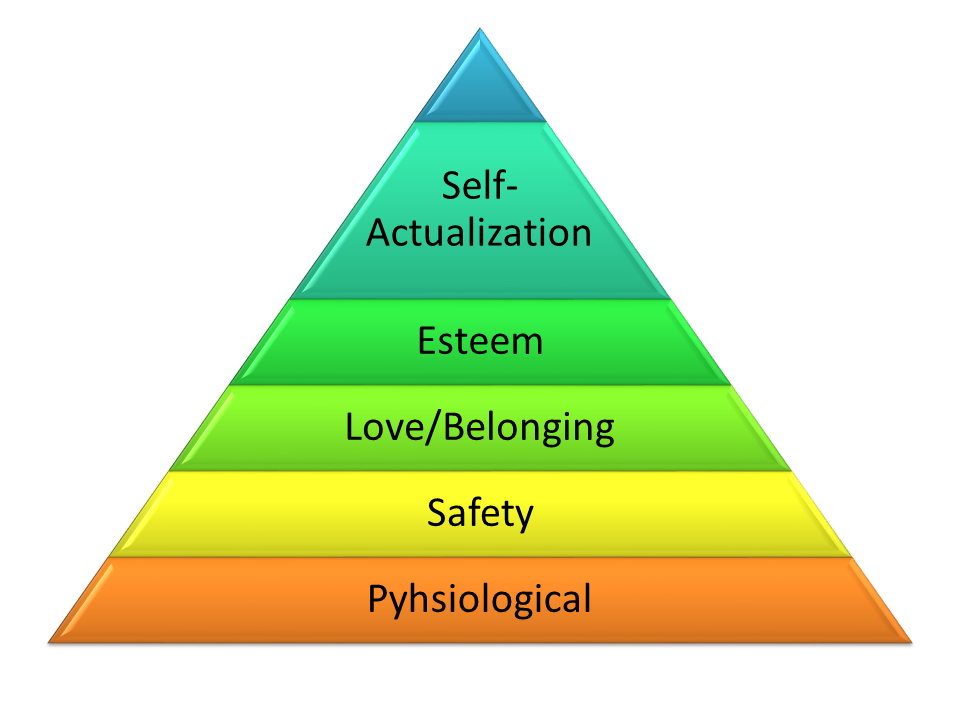
Remuneration and Rewards is about motivating employees to perform and retaining good talent. Giving them more money doesn’t always work as Abraham Maslow postulated in his hierarchy of human needs. One way that Human resource managers can provide the right reward to their employees is to use profiling systems where each employee is evaluated on a series of criteria to identify the right match.
 Performance Appraisals are a powerful means of developing human capital as they reinforce positive behaviour and discourage the negative. Three-sixty appraisals can be helpful as they examine employee performance from the different perspectives of superiors, peers and subordinates. Technology can enhance the appraisal by shielding the identity of the appraiser, online appraisals, review loops, video conferencing etc
The management of human capital in an organization is subject to scrutiny by external parties namely the government and labour unions. Regulators monitor for conformance to labour laws and often require submission of reports to demonstrate this. Automation of this process would save precious manhours. Technology can develop early warning systems help prevent accidents in the factory, reducing government fines for such incidents and elevate the status of the organization as a caring employer.
| Iasa Certification Level | Learning Objective |
|---|---|
| CITA- Foundation | Learner will be able to:
|
| CITA – Associate | Learner will be able to:
|
| CITA – Specialist | Learner will be able to:
|
| CITA – Professional | Learner will be able to:
|
This is the function of the organization that is tasked with developing differentiated new products as it is widely acknowledged a product delivering unique benefits is the key driver of success and profitability.
Product Management consists of the development aspect (inward focused activities) and the marketing aspect (outward focused).
Activities included under the development aspect are:
- Identifying new product candidates
- Defining product requirements
- Determine business case and feasibility
- Scoping and defining new products at high level
- Evangelizing new products within the company
- Building product roadmaps
- Working to a critical path and ensuring all products are produced on schedule
- Ensuring products are within optimal price margins and up to specifications
- Managing the Product Lifecycle
- Product differentiation
- Product planning
- Product positioning and outbound messaging
- Promoting the product externally with the media, customers and partners
- Conduct customer feedback and enabling (pre-production or beta software)
- Bringing new products to the market
- Monitoring the competition
- Promotional material management
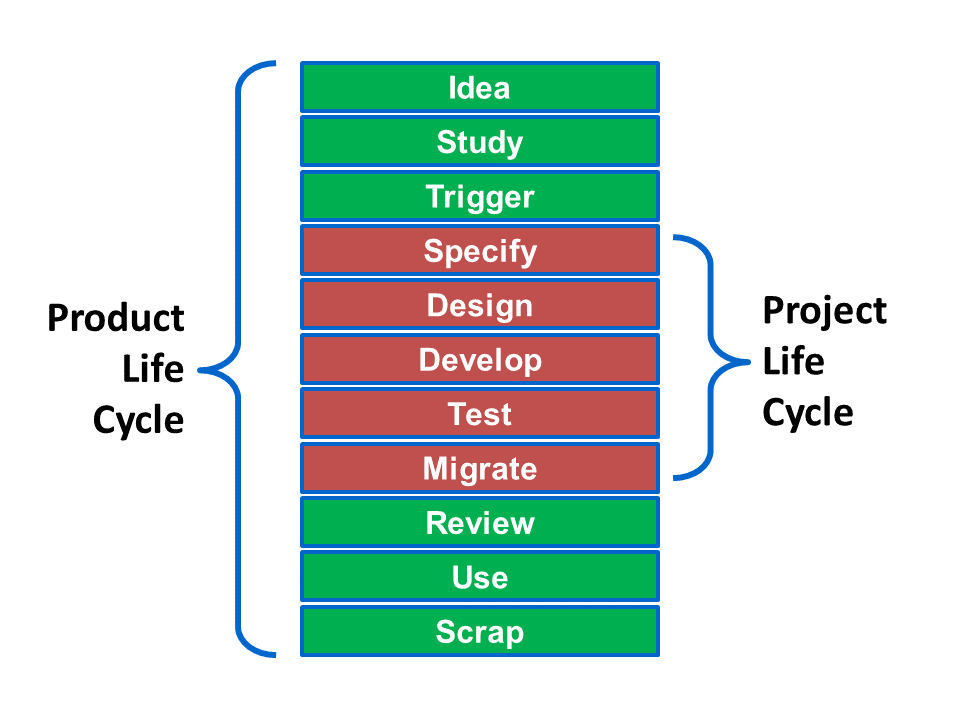 The process begins when someone gets an idea for a new product. Not all ideas are accepted – each is studied to assess its merit. Those deemed promising are marked for further development by triggering a project that will produce the product. At the beginning of this project, the specifications will be determined which become targets the design needs to comply with. The product is then developed and tested before production goes live by migrating the production line to the manufacture of this new product.
Reviews are conducted to optimise and improve the product further throughout its use-life. When the product is deemed to have reached the end of its relevance to the market, it is scrapped.
Why does an architect need this skill?
Common tasks involved in this skill?
What is their ownership in this skill?
Name an example of how an architect would use this in daily activities?
Describe why an architect should be involved in this skill at a corporate level
Primary push back and/or challenges for architects
How would a stakeholder engage an architect for assistance utilizing this skill?
| Iasa Certification Level | Learning Objective |
|---|---|
| CITA- Foundation | The Learner will be able to:
|
| CITA – Associate | The Learner will be able to:
|
| CITA – Specialist | The Learner will be able to:
|
| CITA – Professional | The Learner will be able to:
|
- Get link
- X
- Other Apps


Comments
Post a Comment